E-Business Suite
What it really costs to keep Oracle EBS on-premises
The cost of running Oracle EBS on-premises isn't just the license. Visible costs, hidden costs, and how they compare to a continuity support model.
· 5 min read
The question that reaches IT usually isn't "how much does EBS cost?" It's more of a suspicion: that the system is expensive, but nobody has put a number on it. The license shows up on Oracle's invoice; the rest is spread across several departments and rarely gets added up.
This article separates those costs: the ones already in a report and the ones that aren't, so the comparison against other options is made with complete figures and not just the most visible one.
The question tends to come up at two different moments. The first is when someone in finance reviews technology spending year over year and notices that EBS has sat on the same line for a long time, without it being clear whether that amount is reasonable. The second is when an incident exposes the cost all at once: a month-end close that ran late, a module that stopped working and nobody internally knew why. In both cases, the conversation improves when there is a complete number on the table, not a suspicion.
The visible costs: license, infrastructure, support
These are the ones any finance department already knows, even if they are spread across different budget lines.
- Licensing for Oracle EBS and the database that supports it, with its annual support fee.
- Servers and storage, owned or leased, sized for peak operation, not for daily use.
- Infrastructure staff: database administration, backups, operating system patches.
- A functional and technical support contract with a provider, when the internal team doesn't cover it fully.
Added up, they already give a figure the business recognizes as "the cost of EBS." The problem is that this figure usually falls short, because it almost never includes the IT team's own time spent keeping the infrastructure running, or the opportunity cost of not investing that time elsewhere.
The hidden costs: scarce consultants and the learning curve
These don't appear on any invoice, and they are the ones that weigh most over time.
- EBS consultants are increasingly scarce in the market, because a good share of partners have shifted to cloud products.
- Every ticket that used to be resolved in hours now takes days, because the provider had to reassign someone who didn't know the system.
- Internal team time spent explaining to the outside consultant how a customization works that nobody documented in time.
- Projects that get postponed because nobody wants to be the one who touches the system and breaks it before month-end close.
None of these shows up as a line in the budget, but they get paid for all the same: in people's hours, in incidents that take longer than they should, and in decisions that get postponed because touching the system is frightening.
What happens when Oracle's extended support ends
Oracle has extended Premier Support for EBS 12.2 several times, and today it runs through at least 2037. That long horizon is one more reason not to confuse the cost of sustaining the system with an Oracle deadline: the system can stay supported for years and still be expensive if nobody takes good care of it.
The real risk isn't that Oracle stops supporting the product. It's that the company is left without the people who know how to operate it, long before that support ends.
How it compares to sustaining it with a continuity model
The alternative isn't necessarily to migrate. It's to contract support under a continuous coverage model, instead of hour banks that run out just when you need them most. The difference shows in three things: how long a ticket takes to resolve, how well each change is documented, and whether the same team is still on the project six months later.
A model like this doesn't eliminate the visible costs, but it does reduce a good part of the hidden ones: less time lost explaining the system from scratch, fewer tickets that drag on because the consultant changed, fewer accumulated patches out of fear of touching something.
What to ask before comparing two support quotes
Not all support proposals cover the same things, even if they look similar in the final number. Before comparing price against price, it's worth clarifying four things.
- Whether coverage includes the database and operating system, or only the ERP's functional layer.
- How many people know your specific installation, and what happens if one of them leaves the project.
- Whether documentation of each change is a deliverable that belongs to you, or stays in the provider's heads.
- How response time is measured: from when the ticket is opened, or from when someone reviews it.
Two quotes at the same price can cover very different things. The one that looks cheaper can end up costing more, if it forces you to solve on the side what should be included.
Where to start
With an assessment that puts the visible costs and the ones currently spread across departments into a single document. It is the starting point for comparing, with numbers and not suspicions, whether it makes sense to sustain, move the infrastructure or migrate.
Tell us how your support is contracted today and how often a ticket takes longer than it should. The assessment is delivered and it is yours, even if you decide not to continue.
How we can help
Facing something similar?
Tell us which system you run and what it can't do for you today. The first conversation is about understanding your situation.
Request an assessment

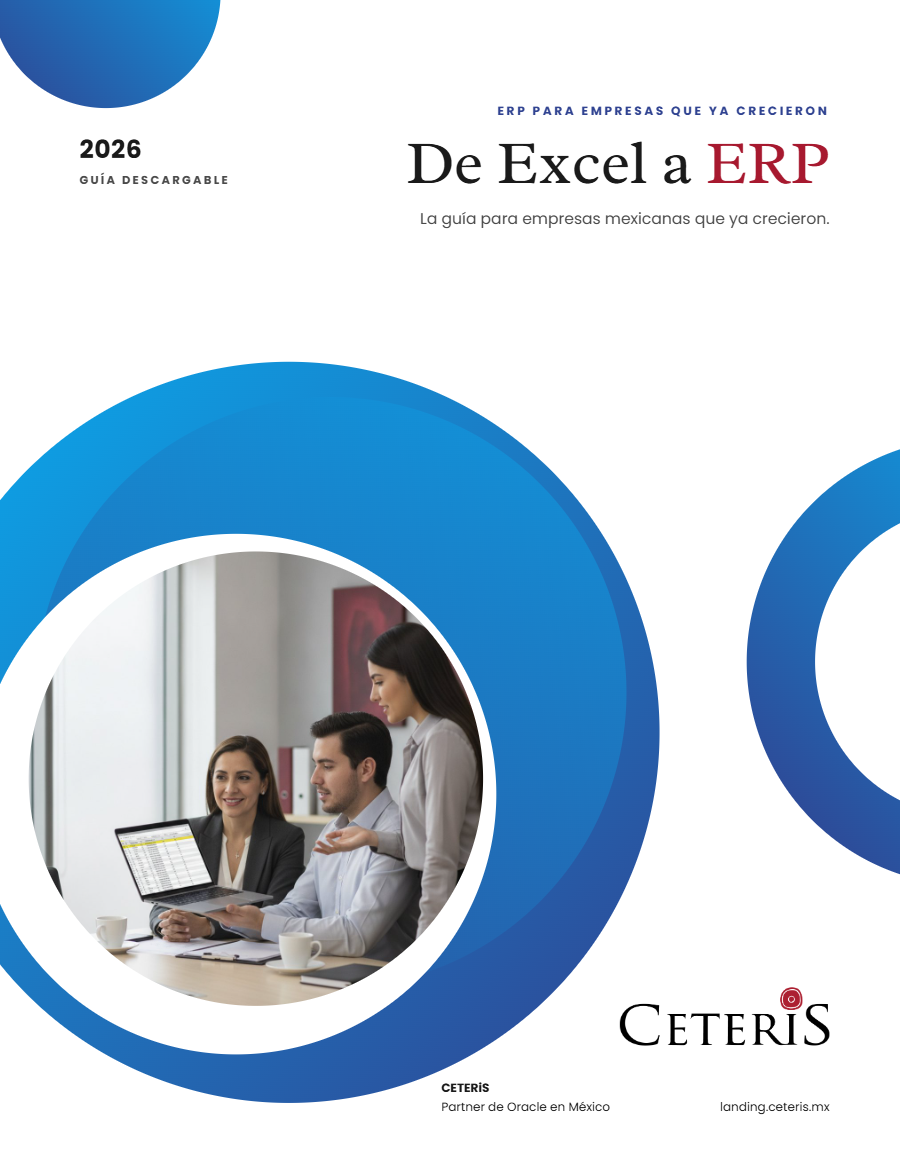
Free guide · 24 pages · In Spanish
From Excel to ERP: how to tell if it's time
What we'd tell you in a first assessment meeting, in writing: how to know whether you need an ERP, what it costs in estimated ranges and how to migrate without disrupting operations. Currently available in Spanish; English edition coming soon.
- The 7 signs you've outgrown spreadsheets
- What an ERP costs and what drives the price
- The 5 most expensive mistakes
- A checklist to decide whether it's time