NetSuite and Choosing an ERP
How much does it cost to implement an ERP in Mexico?
Why nobody publishes a fixed ERP price, which variables drive the real cost, and what to ask in a quote so you can compare proposals against each other.
· 4 min read
It's the question almost everyone arrives with: how much does it cost? And it's also the one with the least direct answer, because an ERP isn't sold like an off-the-shelf product with a single price. What follows isn't a number. It's what really drives the cost and how to compare proposals that look alike on paper.
Why nobody publishes a fixed price
NetSuite, for example, doesn't publish a public price list. According to its own documentation, the license is built from three components: the base platform, the optional modules the company chooses, and the number of users, plus an implementation cost separate from the annual license cost.
That isn't a strategy of hiding the price; the real price simply depends on each company. Two businesses in the same industry and with the same revenue can end up with very different quotes if one has three legal entities and the other has one, or if one needs manufacturing modules and the other doesn't.
Which variables drive the cost
A handful of factors explain most of the difference between one quote and another.
- Number of users who will operate the system, not just view it.
- Active modules: finance is the core, but manufacturing, e-commerce or project management add license cost.
- Number of companies or legal entities to be consolidated in the same system.
- Quality and volume of the data that has to be migrated from the current system.
- Mexican tax localization: configuration of CFDI (Mexican e-invoice), payment complements and electronic accounting filings, and integration with the PAC (authorized certification provider for e-invoices).
- Integrations with systems that already work, such as point of sale or the warehouse system.
- Consulting hours to configure the system and train the team that will use it.
Of that list, tax localization is the one that most surprises people comparing proposals. Oracle and NetSuite offer a localization for Mexico that covers the basics; its configuration, the PAC integration and the custom add-ons for each operation are defined in the project, and they should be included in the quote.
License, implementation and the cost that comes after
It helps to separate three buckets of cost that get blended into one in casual conversation. The license is the recurring payment, almost always annual, for using the software. The implementation is the one-time project to configure, migrate data and get the system running. And post-go-live support is a cost that continues, with or without an active project.
The most common mistake is quoting only the implementation and forgetting that the system keeps generating license and support costs every year afterward. An ERP isn't paid off the day it goes live; it just starts costing in a different way.
Indicative ranges, with a caveat
There is no official Oracle or NetSuite source that publishes price ranges for the Mexican market, so any specific figure someone gives you without knowing your case is, in the best scenario, a starting point for negotiation, not a real price. The honest thing to say is that the range depends directly on the variables in the previous section, and that the only way to get a reliable number is to quote against a scope that is already defined.
That is the trap of asking for a quote too early: without a written scope, each vendor assumes a different project, and the figures that come back can't be compared with each other even if they seem to describe the same project.
There are two ways to limit the risk before you have a final number. The first is to ask each vendor to break down its proposal by the same variables: users, modules, tax localization, data migration and integrations, instead of accepting a single total. The second is to ask directly what is left out of scope, because that is usually where the cost that shows up later hides, once the project is already underway.
It also helps to split the budget into two horizons. One is the cost of getting the system running, which is the one almost everyone asks for up front. The other is the cost of sustaining it for the entire first year, with license, support and the adjustments almost any implementation needs once the team starts using the system every day. Comparing proposals only on the first number leaves out half of the decision.
What to ask so you can compare apples to apples
Before deciding based on the lowest number, it is worth confirming what each proposal includes. Whether Mexican tax localization is within the price or charged separately. Whether the migration of historical data is covered or is an extra cost that appears midway through the implementation. How many users and exactly which modules the figure covers. And what happens to support once the project warranty ends, because month three after go-live is usually where the real questions appear.
A quote that doesn't answer those questions is incomplete. And the gap almost always shows up midway through the implementation, which is the worst time to discover it.
The starting point for a real scope, and with it a comparable quote, is an assessment. In the meantime, the From Excel to ERP guide (available in Spanish) explains what to prepare before sitting down to get quotes from any vendor.
Sources
How we can help
Facing something similar?
Tell us which system you run and what it can't do for you today. The first conversation is about understanding your situation.
Request an assessment


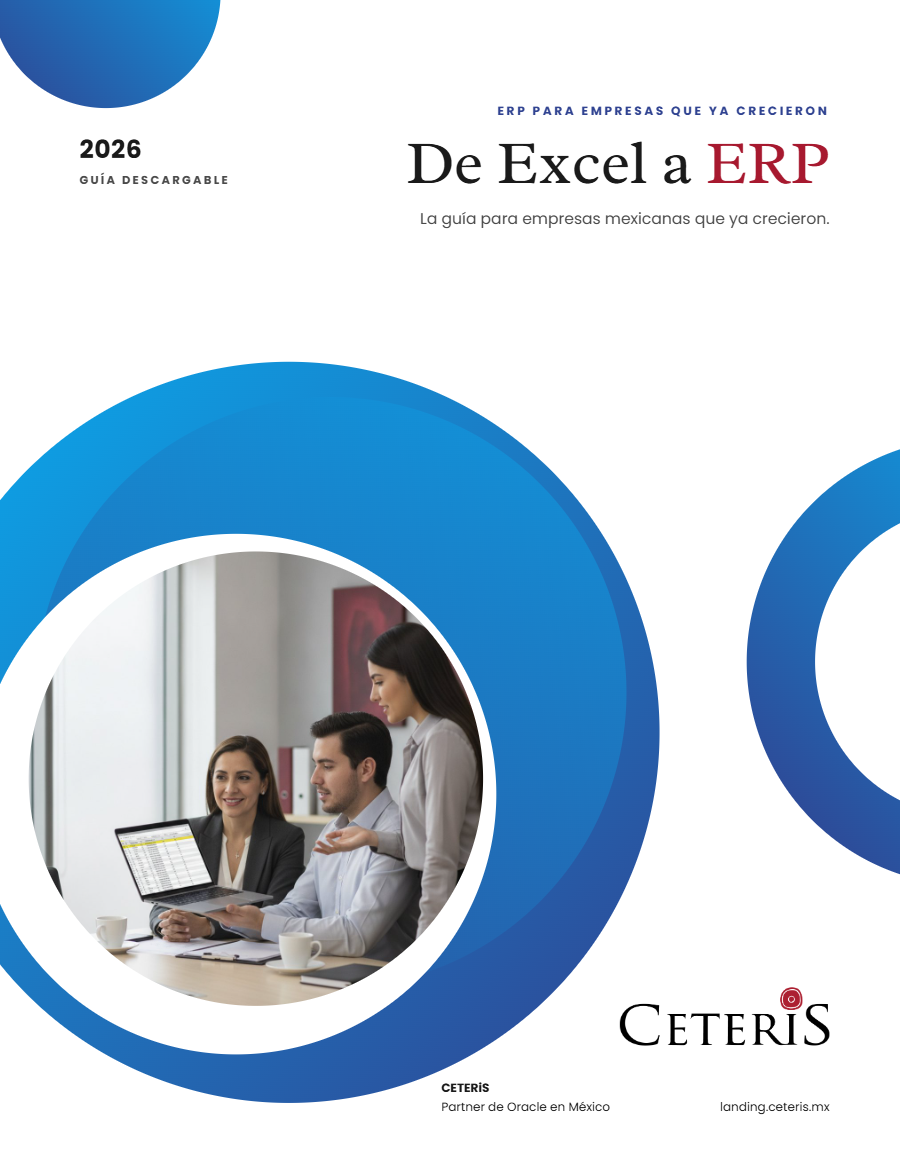
Free guide · 24 pages · In Spanish
From Excel to ERP: how to tell if it's time
What we'd tell you in a first assessment meeting, in writing: how to know whether you need an ERP, what it costs in estimated ranges and how to migrate without disrupting operations. Currently available in Spanish; English edition coming soon.
- The 7 signs you've outgrown spreadsheets
- What an ERP costs and what drives the price
- The 5 most expensive mistakes
- A checklist to decide whether it's time