NetSuite and Choosing an ERP
When Oracle NetSuite is the right ERP for your company (and when it isn't)
Criteria to decide whether Oracle NetSuite fits your company: operation size, entities you consolidate, multi-year total cost and who supports you after go-live.
· 3 min read
When a company seriously evaluates its first ERP, Oracle NetSuite shows up on the list early. The useful question is not whether it is good in the abstract, but whether it fits your operation today and the one you will have in three years.
This article doesn't compare brands. It gives you the criteria to decide with your own information: what size of operation NetSuite is designed for, how its cost accumulates, what happens with support after go-live and when it makes sense to look at another Oracle option.
What kind of operation it is designed for
NetSuite, as the company itself describes it, is a cloud-native system with no on-premises version, with finance, supply chain and e-commerce integrated by design. It is meant for organizations that have already outgrown the size of an early-stage small business.
It fits well for the company that grew faster than its system, that needs to consolidate several entities or countries into a single financial report and that doesn't want to maintain its own infrastructure.
Licensing and total cost
NetSuite is licensed by platform, modules and users, with a recurring annual cost and no on-premises installation option. What you should compare is not the first-year monthly fee, but the total cost over three to five years: license, support, updates and the work of maintaining integrations as the company grows.
A system that is cheaper at the start but forces a complete reconfiguration once you pass a certain size is not necessarily cheaper on the full tally.
Who supports you after go-live
Implementation and support in Mexico go through partners, not through the manufacturer. The question that matters is not who sells NetSuite, but who is still there in month six, when go-live is behind you and the real operating questions appear. Consultant turnover midway through an implementation is one of the most frequent reasons a project stalls.
How far it goes without migrating again
Changing ERPs brings an entire data migration and training project with it. That is why it is worth asking, before choosing, not just what the system solves today, but how far it goes when you add a second legal entity, enter another country or need to consolidate several business units.
When it isn't the right choice
If your operation is a single entity, with no complex inventory, few transactions and no need to consolidate, you may not need NetSuite yet. What you may be missing is getting your process in order before buying any system.
At the other extreme, if your organization has highly branched processes, several business units and large-scale consolidation needs, the conversation moves to Oracle Fusion Cloud ERP.
Three questions to land the decision
Before requesting a quote, ask for answers about your specific operation: how many legal entities you can consolidate without extra manual work, how tied Mexican tax localization stays to whoever installed it, and what happens the day you need to add a module you didn't buy today.
If you're still not clear on which case you are in, the guide “De Excel a ERP” (available in Spanish for now) is a good starting point before talking to any vendor.
How we can help
Facing something similar?
Tell us which system you run and what it can't do for you today. The first conversation is about understanding your situation.
Request an assessment


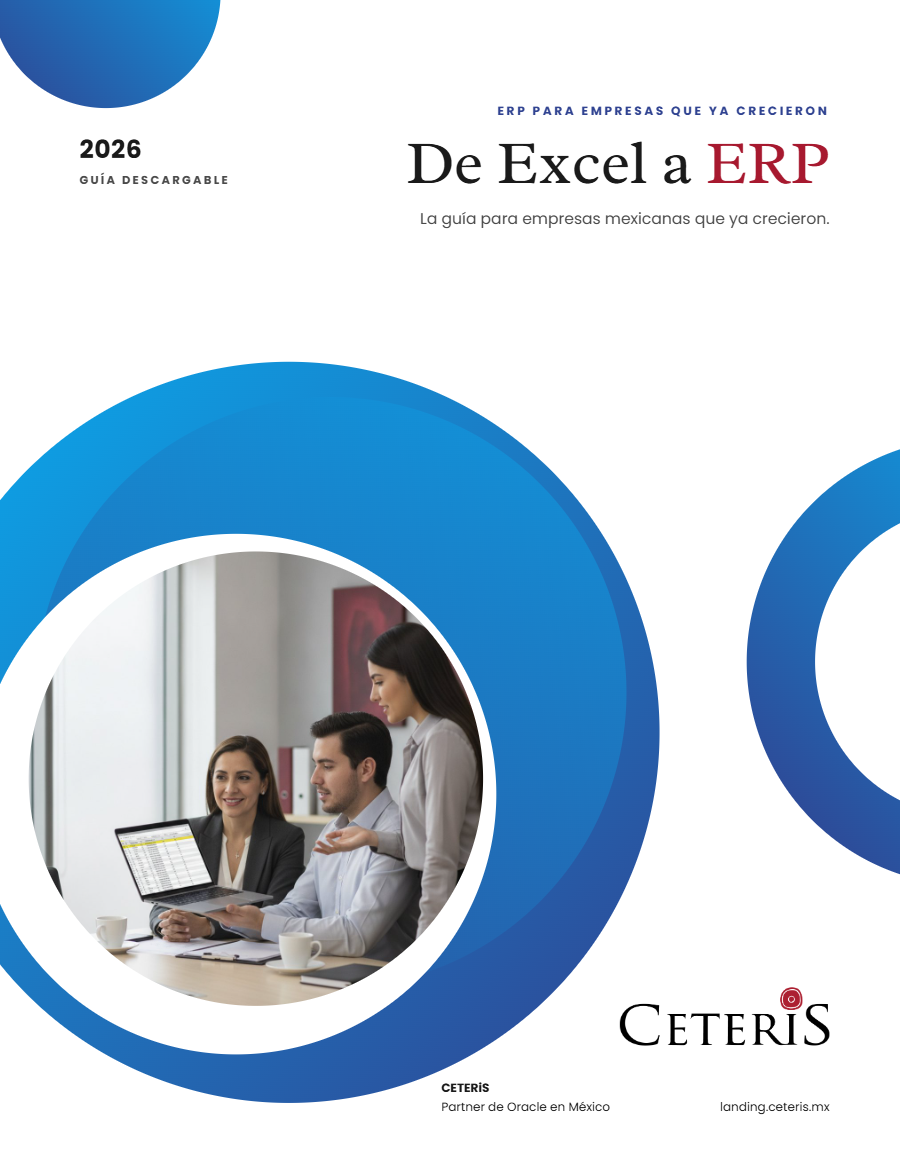
Free guide · 24 pages · In Spanish
From Excel to ERP: how to tell if it's time
What we'd tell you in a first assessment meeting, in writing: how to know whether you need an ERP, what it costs in estimated ranges and how to migrate without disrupting operations. Currently available in Spanish; English edition coming soon.
- The 7 signs you've outgrown spreadsheets
- What an ERP costs and what drives the price
- The 5 most expensive mistakes
- A checklist to decide whether it's time